

How To Evaluate Affiliate Niches: Profitability Guide
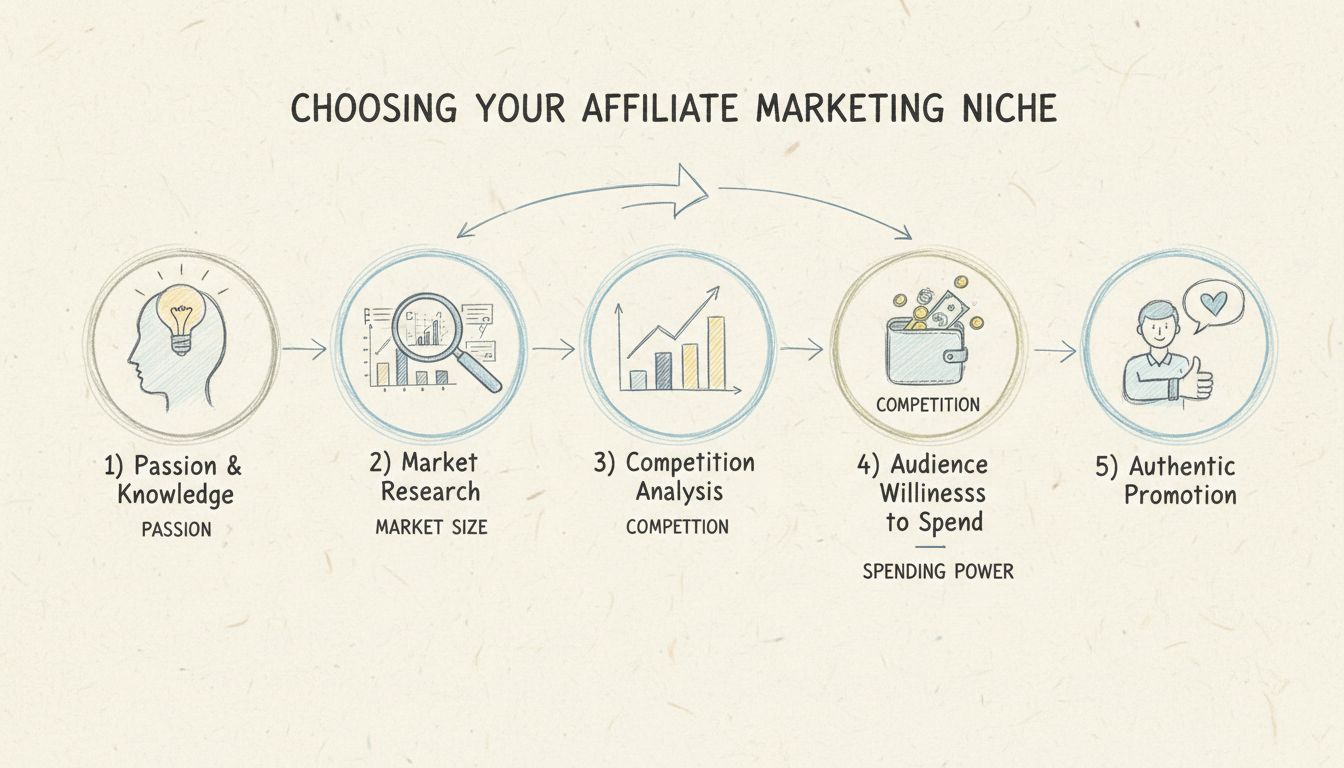
Choosing a profitable affiliate marketing niche means checking more than search volume. You need to confirm that people in the United States want a solution, that suitable products have affiliate programs, and that the expected commission can cover your content, tools, and promotion costs.
The best niche is not always the largest one. It is often a focused market with clear buyer intent, reasonable competition, reliable products, and enough room to build trust.

What Makes an Affiliate Niche Profitable?
A profitable affiliate niche connects four elements:
- A real audience problem
- Products or services that solve it
- A way to reach people before they buy
- Enough commission to justify your costs
Affiliate marketing works on a simple model. You publish useful content, send visitors to a merchant, and earn a commission when a visitor completes a qualifying action.
Common actions include:
- Buying a product
- Starting a software subscription
- Requesting a quote
- Opening a financial account
- Booking travel
- Filling out a lead form
- Signing up for a trial
A niche can have high traffic but weak profit if visitors do not buy. Another niche can have modest traffic but strong profit if readers have urgent needs and products pay well.
Affiliate profitability formula
Use this basic estimate:
Estimated profit = affiliate revenue − operating costs
To estimate affiliate revenue:
Monthly revenue = monthly visitors × affiliate click rate × merchant conversion rate × average commission
For example, suppose a website receives:
- 10,000 monthly visitors
- A 20% affiliate click rate
- A 3% merchant conversion rate
- A $40 average commission
The estimated revenue is:
10,000 × 0.20 × 0.03 × $40 = $2,400 per month
If monthly expenses total $900, the estimated profit is $1,500.
This is only a planning model. Actual results can change because of traffic quality, device use, refunds, tracking limits, seasonal demand, and changes to affiliate terms.
Revenue is not the same as profit
A niche may appear attractive because it has high commissions. Yet high commissions often come with:
- High customer acquisition costs
- Strict approval rules
- Tough competition
- Long sales cycles
- More refunds or cancellations
- Lower conversion rates
Judge the full business model, not just the advertised payout.
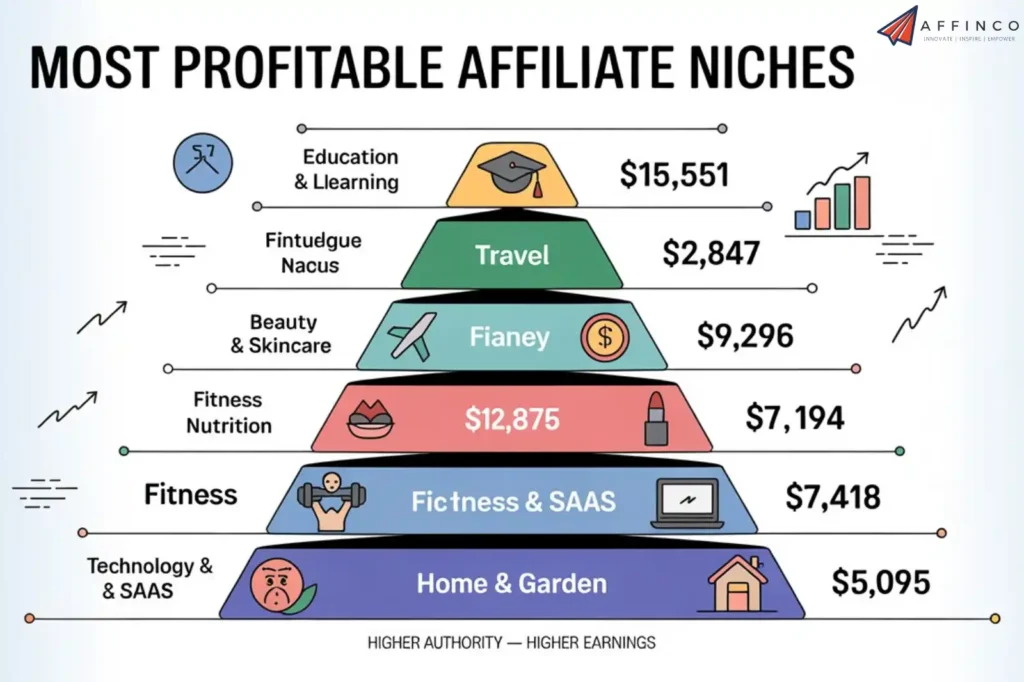
Step 1: Define the Niche and Its Buyer
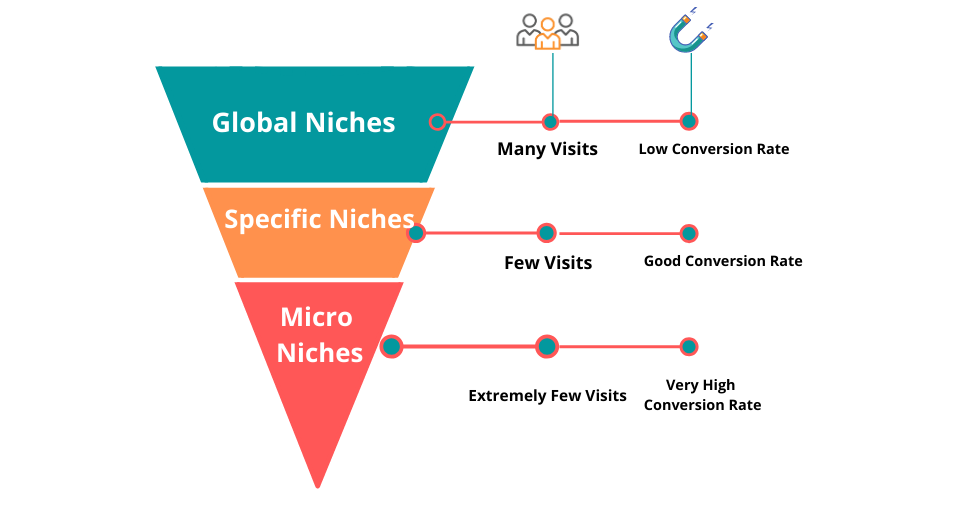
Start with a narrow market, not a broad topic.
“Health” is too broad for most new affiliate sites. A more useful starting point might be:
- Walking shoes for older adults
- Meal planning for people with diabetes
- Home office chairs for small apartments
- Software for independent contractors
- Camping gear for families in the western United States
A niche should describe both the topic and the buyer.
Use the problem-solution-buyer test
Write one sentence:
“I help [specific audience] solve [specific problem] with [specific product category].”
Examples:
- I help first-time RV owners choose safe water filters.
- I help freelance designers select project management software.
- I help parents find durable hiking gear for young children.
If you cannot name the buyer or the problem, the niche may be too broad.
Check whether the problem is strong enough
Strong affiliate niches often involve one or more of these conditions:
- The problem costs the buyer money
- The problem takes time to solve
- The problem causes stress
- The buyer wants to avoid a costly mistake
– The buyer needs help comparing products - The product must be replaced or renewed
- The buyer has a clear deadline
A buyer who searches “best tax software for a small business” is usually closer to a purchase than someone who searches “what is budgeting?”
Both topics can attract traffic. The first usually has stronger commercial intent.
Separate audience interest from buyer demand
People may enjoy reading about a topic without buying anything. This is common in entertainment, news, and broad hobby categories.
Look for signs that readers spend money:
- Product comparisons
- “Best” searches
- Reviews
- Alternatives
- Pricing searches
- Coupons and discounts
- Setup guides
- Replacement parts
- Subscription options
- “Is it worth it?” searches
These searches do not guarantee sales. They do show that visitors may be evaluating a purchase.

Step 2: Measure Demand Without Trusting One Metric
Demand research should combine several signals. No single tool can prove that a niche will be profitable.
Use keyword intent, not just keyword volume
Search volume tells you how many searches a phrase may receive. It does not tell you how many people will click an affiliate link or buy.
Group keywords by intent:
| Search intent | Example | Affiliate value |
|---|---|---|
| Informational | How does a standing desk work? | Low to medium |
| Commercial research | Best standing desks for back pain | Medium to high |
| Comparison | Brand A vs. Brand B | High |
| Transactional | Buy Brand A standing desk | High |
| Support | How to fix a standing desk motor | Low |
A healthy niche often includes all four types. Informational content can attract new readers. Comparison and buying content may generate most affiliate revenue.
Check demand across the United States
Search behavior may differ by country. A product that sells well in the United Kingdom may have limited demand in the United States because of shipping, laws, climate, or product availability.
For a USA-focused site, check:
- Whether merchants ship to US addresses
- Whether prices are shown in US dollars
- Whether products meet US standards or rules
- Whether the audience uses US retailers
- Whether the problem exists across the target states
- Whether seasonal demand varies by region
Google Trends can help compare interest over time and by location. It shows relative search interest, not sales. Use it to spot seasonality and regional differences, not to predict exact revenue.
Look for stable or recurring demand
A niche is less risky when demand is:
- Steady throughout the year
- Supported by repeat purchases
- Linked to subscriptions
- Connected to a lasting need
- Not dependent on one short trend
Seasonal niches can still work. You must plan for slower months and avoid treating peak-season traffic as normal traffic.
For example, snow removal equipment may perform well in winter but need a different content plan in summer. A niche built around home maintenance may offer related topics during the entire year.
Use paid search as a demand clue
Search engine ads can reveal commercial value. If several companies pay to appear for buyer-focused terms, those terms may have economic value.
This is not proof that affiliate content will earn money. Advertisers may have higher margins, better landing pages, or different conversion systems.
Treat ad activity as one clue among several.

Step 3: Find and Compare Affiliate Programs
A niche is not ready for evaluation until you identify real offers.
Search for programs through:
- Direct merchant affiliate pages
- Affiliate networks
- SaaS partner programs
- Retailer programs
- Lead generation programs
- Professional associations
- Brand partnership pages
Examples of affiliate networks include CJ Affiliate, Impact, Awin, Rakuten Advertising, and ShareASale. Programs and terms change, so check the current agreement before relying on any payout.
Compare the terms that affect profit
Do not compare commission percentages alone. Record these details for each program:
| Factor | Why it matters |
|---|---|
| Commission amount | Determines revenue per conversion |
| Commission type | One-time, recurring, or lead-based |
| Cookie or tracking period | Affects attribution after the click |
| Approval rules | Some programs reject new or small sites |
| Payment threshold | Delays access to earnings |
| Return policy | Refunds may reverse commissions |
| EPC, if reported | Offers a rough network-level performance clue |
| Product price | Affects commission value |
| Subscription retention | Matters for recurring commissions |
| Brand reputation | Affects trust and conversion |
| Link restrictions | May limit paid ads, email, or coupon use |
An advertised “50% commission” may be less valuable than a 5% commission on a product that converts well and has a high order value.
Understand EPC carefully
Earnings per click, or EPC, estimates how much an affiliate earns per click within a stated time frame. Networks may calculate EPC using their own method.
EPC can help compare programs, but it is not your personal forecast. Network EPC may include:
- Large publishers
- Coupon sites
- Email traffic
- Paid traffic
- Experienced affiliates
- Different countries
- Different traffic sources
Ask the affiliate manager for details if the program is important to your plan.
Check whether the product deserves a recommendation
A profitable niche still creates risk if the products are poor.
Before promoting an offer, review:
- Customer complaints
- Warranty terms
- Refund rules
- Shipping limits
- Product availability
- Support quality
- Data collection practices
- Advertising claims
- Regulatory concerns
The Federal Trade Commission requires clear disclosure of material connections between endorsers and sellers. The FTC’s guidance explains that affiliate relationships should be disclosed in a clear and noticeable way, close to the recommendation. See the FTC endorsement guidance.

Step 4: Estimate Earnings With Conservative Numbers
Build a simple forecast before creating dozens of articles.
Use three cases:
- Conservative
- Expected
- Strong
For each case, change the traffic, click rate, conversion rate, and average commission.
Hypothetical affiliate forecast
| Variable | Conservative | Expected | Strong |
|---|---|---|---|
| Monthly visitors | 3,000 | 10,000 | 25,000 |
| Affiliate click rate | 10% | 20% | 25% |
| Merchant conversion rate | 1% | 3% | 4% |
| Average commission | $25 | $40 | $50 |
| Estimated monthly revenue | $75 | $2,400 | $12,500 |
These figures are hypothetical. They are not average industry results.
The expected case should not rely on perfect rankings or unusually high conversion rates. If the niche only works under the strong case, it may not be a sound first project.
Calculate break-even traffic
You can estimate the traffic needed to cover costs:
Break-even visitors = monthly costs ÷ revenue per visitor
Revenue per visitor is:
Affiliate click rate × merchant conversion rate × average commission
Suppose your monthly cost is $600:
- Affiliate click rate: 20%
- Merchant conversion rate: 3%
- Average commission: $40
Revenue per visitor:
0.20 × 0.03 × $40 = $0.24
Break-even traffic:
$600 ÷ $0.24 = 2,500 visitors per month
This calculation helps you compare niches. A niche with a $0.24 expected value per visitor needs less traffic than one with a $0.04 value per visitor.
Include all operating costs
Possible costs include:
- Domain registration
- Web hosting
- Email software
- Keyword research tools
- Content production
- Editing
- Product samples
- Photography
- Website design
- Paid promotion
- Legal or accounting support
- Memberships and software subscriptions
Do not count your time as free if you are comparing affiliate marketing with other work. Assign a reasonable value to writing, research, updates, and support.
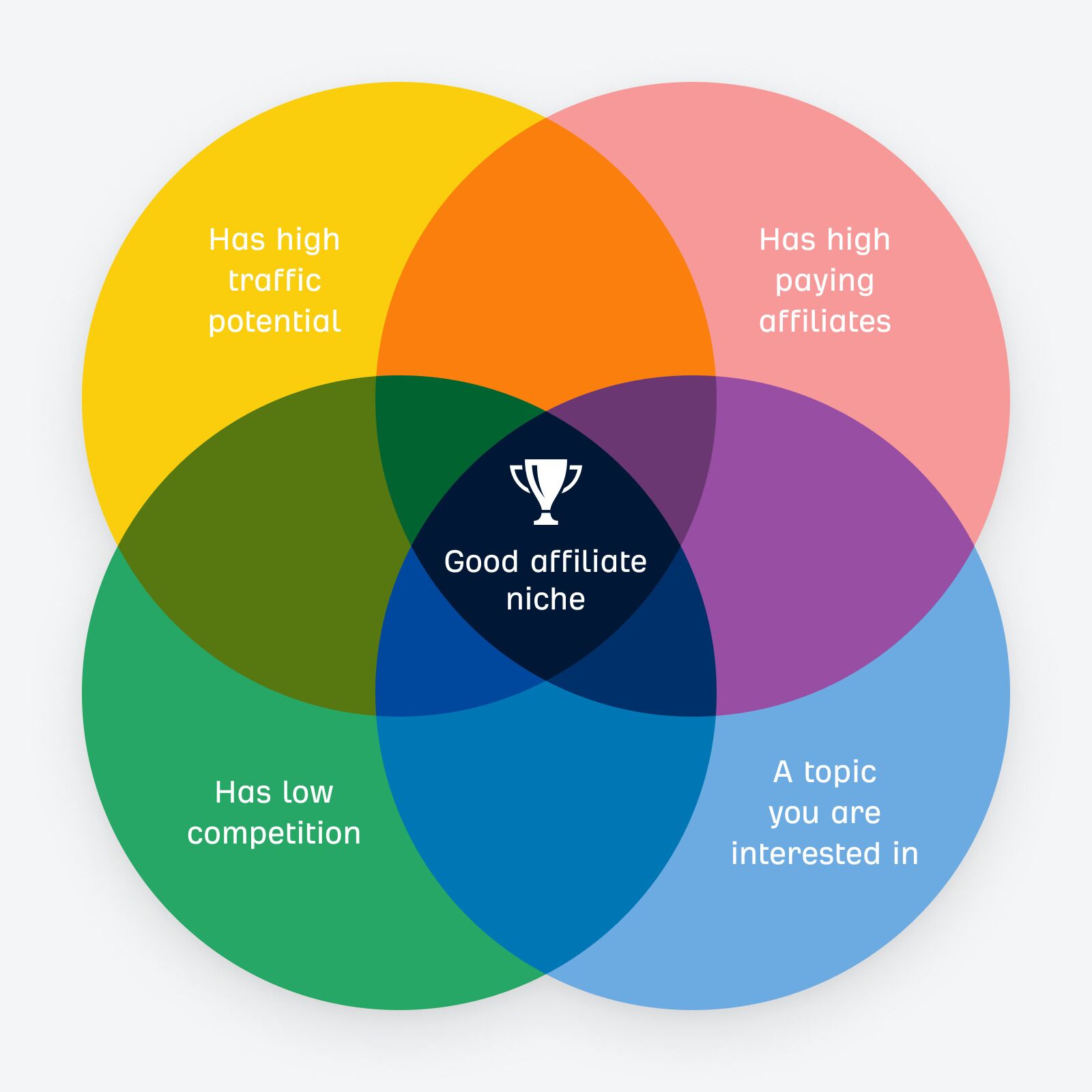
Step 5: Assess Competition and Your Ability to Compete
Competition does not automatically make a niche bad. It often proves that money exists.
The real question is whether you can create a useful page that serves a specific audience better than existing results.
Review the current search results
For important keywords, examine the actual pages ranking in the United States. Look for:
- How well the pages answer the search
- Whether the information is current
- Whether the content tests products or repeats merchant claims
- Whether the page shows prices and limits
- Whether the author has relevant experience
- Whether the page explains who should avoid the product
- Whether the page compares total ownership cost
- Whether the page includes clear disclosures
Do not assume that a weak-looking page means easy rankings. Search results may reflect site authority, links, brand demand, or user satisfaction that is not visible from the article alone.
Find a narrow advantage
A useful advantage can come from:
- A specific customer group
- A regional need
- Better product testing
- Better comparison tables
- Clearer cost calculations
- Updated compatibility information
- More honest limitations
- Original photos or demonstrations
- Expert review where suitable
- Better support content after the purchase
“Best laptops” is broad. “Best laptops for college students who need long battery life under $800” gives you a clearer reader and buying problem.
Consider authority and trust
Some niches need more trust than others.
Topics involving health, personal finance, legal matters, safety, or major purchases require careful research and clear limits. You should not present general information as personal advice.
For finance content, for example, the Consumer Financial Protection Bureau provides consumer guidance and official resources. For tax matters, the Internal Revenue Service provides primary information through IRS.gov. Use primary sources where rules or financial consequences matter.
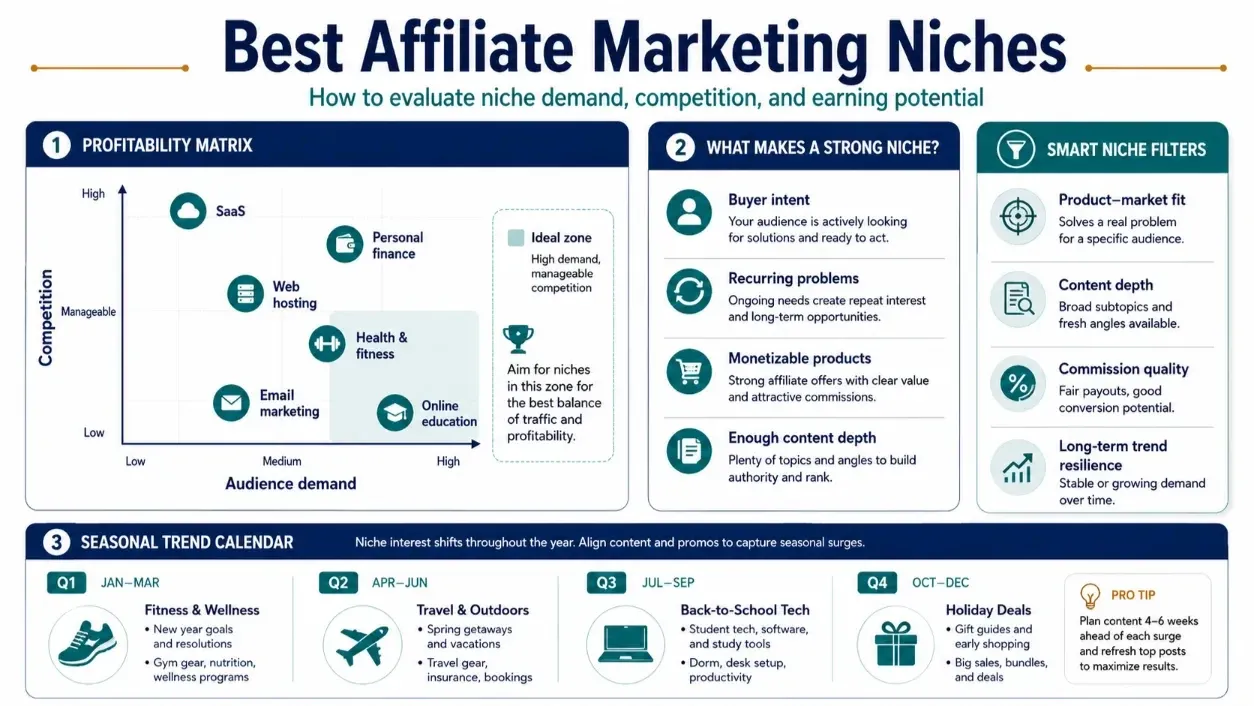
Step 6: Check Compliance, Disclosure, and Business Risk
A profitable niche must also be workable within legal and platform rules.
Plan clear affiliate disclosures
A disclosure should be easy to see before or near the recommendation. A vague statement hidden on a legal page may not be enough.
A plain example is:
This page contains affiliate links. If you buy through a link, we may earn a commission at no extra cost to you.
Adjust the wording to match your relationship and legal advice. Do not say that a product is “best” only because it pays more.
The FTC also expects endorsements to reflect honest opinions and supportable claims. Avoid claims about health outcomes, savings, safety, or performance unless you have suitable evidence.
Review platform restrictions
Each program may limit:
- Paid search bidding
- Use of trademarks
- Email promotion
- Coupon codes
- Incentives
- Social media promotion
- Browser extensions
- Software downloads
- Use of affiliate links in certain locations
Read the current program agreement. A niche may become unprofitable if its main traffic method violates the merchant’s terms.
Consider tax and business records
Affiliate income may create tax and recordkeeping duties in the United States. Rules can depend on your business structure, state, income, and expenses.
Keep records of:
- Affiliate payments
- Business expenses
- Invoices
- Tax forms
- Promotional costs
- Refunds or reversals
Use the IRS as a primary source and consult a qualified tax professional for advice about your situation.
Watch for sensitive categories
Be cautious with niches involving:
- Medical treatment
- Supplements
- Debt relief
- Investments
- Credit repair
- Legal services
- Weapons
- Child safety
- High-risk tools
- Personal data
These markets may offer high commissions, but they also carry higher compliance and trust risks. A high payout does not compensate for unsupported claims or harm to readers.
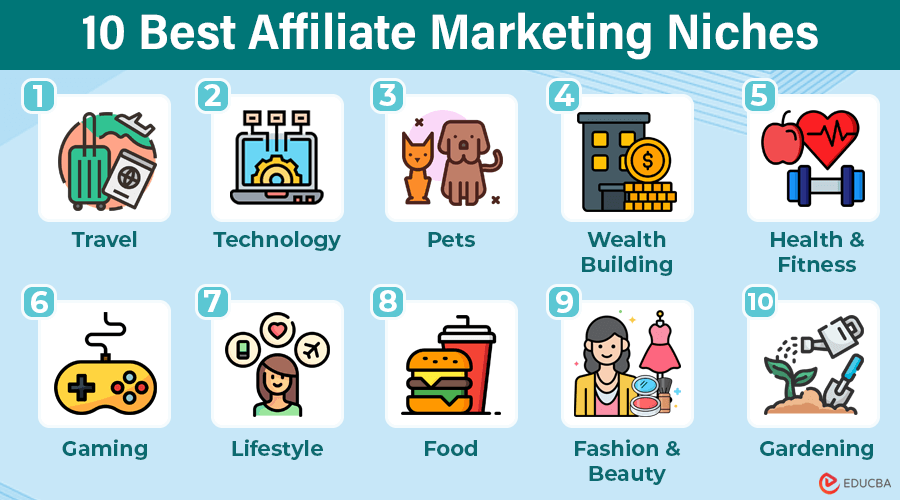
Step 7: Score the Niche Before You Commit
A scorecard can reduce emotional decisions. Rate each factor from 1 to 5.
| Factor | 1 means | 5 means |
|---|---|---|
| Buyer demand | Few clear buying searches | Strong, repeated buying demand |
| Product quality | Weak or risky offers | Trusted products with clear value |
| Commission economics | Low value per visitor | Strong value per visitor |
| Program access | Hard to join or restrictive | Several reliable programs |
| Competition | Difficult with no clear angle | Competitive but beatable |
| Content depth | Few useful topics | Many related questions |
| Repeat revenue | Mostly one-time sales | Renewals or repeat purchases |
| Compliance risk | High legal or platform risk | Manageable with clear rules |
| Seasonality | Short, unstable demand | Stable or predictable demand |
| Personal fit | Little knowledge or interest | Strong ability to help readers |
Add the scores for a total out of 50.
This score is a planning tool, not a scientific prediction. A niche with a high score can still fail because of poor execution. A niche with a lower score may work if you have unusual expertise, access, or distribution.
Suggested decision bands
- 40–50: Worth deeper validation
- 30–39: Test with a small content set
- 20–29: Proceed only with a clear advantage
- Below 20: Choose another niche or change the angle
Do not let a high commission erase serious compliance, product, or competition problems. Treat those as veto factors.
Common Mistakes When Evaluating an Affiliate Niche
Choosing a niche because the commission is high
High commissions attract affiliates. They may also attract strong competitors and strict program controls.
Look at expected revenue per visitor, not commission percentage alone.
Treating search volume as sales volume
A keyword with 100,000 searches may produce less income than a keyword with 1,000 searches if the smaller audience has stronger buying intent.
Study the full topic cluster and the path from search to purchase.
Ignoring merchant conversion rates
You control the quality of your content, but the merchant controls the checkout experience.
A slow site, weak product page, poor return policy, or confusing checkout can reduce your earnings after the click.
Relying on one affiliate program
Programs can reduce commissions, close applications, change terms, or remove products.
Where appropriate, build more than one monetization path:
- Several merchants
- Related products
- Lead generation
- Display advertising
- Digital products
- Services
- Email marketing
Do not add unrelated offers just to create more links.
Copying product descriptions
Merchant copy rarely answers the reader’s real question: “Is this right for me?”
Add useful analysis such as:
- Who should buy it
- Who should avoid it
- What it costs over time
- What it replaces
- What it does not include
- Which alternative fits a different buyer
Ignoring updates
Prices, software features, stock, warranties, commissions, and product models change.
Mark pages for review based on risk. Time-sensitive pages may need monthly checks. Stable educational content may need less frequent review.
Publishing too much before testing
Start with a small set of related pages. Track impressions, clicks, affiliate outbound clicks, conversions, and revenue.
If readers visit but do not click, improve the offer match or page layout. If they click but do not buy, review the merchant, audience intent, and product fit.

A Practical Niche Validation Process
Use this sequence before investing heavily:
- Define one buyer and one problem.
- List at least 20 related search topics.
- Separate informational and buying intent.
- Find at least three relevant affiliate programs or merchants.
- Record commission, tracking, refund, and approval terms.
- Estimate revenue per visitor with conservative assumptions.
- Review US search results for your main buying terms.
- Identify a specific way to be more useful.
- Check FTC, platform, tax, and category risks.
- Publish a small test set and measure real behavior.
Signs the test is working
Early success does not require large revenue. Useful signals include:
- Search impressions increase
- Pages attract the intended audience
- Readers click relevant affiliate links
- Visitors return to related pages
- Email sign-ups grow
- Merchants approve your applications
- Content earns natural mentions
- Conversions occur without heavy paid traffic
Traffic alone is not enough. Look for movement from impression to visit, from visit to affiliate click, and from click to sale.
What to do if the niche fails
Find the failure point.
- No impressions: The topic, quality, authority, or search targeting may be weak.
- Impressions but few clicks: The title or search match may be poor.
- Clicks but no affiliate clicks: The content may not solve the buying task.
- Affiliate clicks but no sales: The merchant, product, price, or traffic intent may be weak.
- Sales but little profit: Commission, refunds, or operating costs may be too low.
- Good sales but program risk: Add another merchant or change the business model.
Do not abandon a niche based on a few days of data. Search visibility and purchase cycles vary. Set a review period that fits the niche and product price.
Key Takeaways
- Evaluate the buyer, problem, product, traffic, and commission together.
- Commercial intent often matters more than raw search volume.
- Use conservative estimates for click rates, conversion rates, and commissions.
- Compare affiliate terms beyond the headline payout.
- Check US availability, rules, shipping, and audience needs.
- Competition is acceptable when you have a clear way to help readers better.
- Treat health, finance, legal, and safety niches with extra care.
- Test a small content group before building a large site.
- Measure profit, not just traffic or commissions.
Frequently Asked Questions
What is the most profitable affiliate marketing niche?
There is no single most profitable niche for every affiliate. Profit depends on buyer demand, product quality, commission value, competition, traffic source, and your ability to create trusted content.
A smaller niche may outperform a large niche if it has strong buying intent and less wasted traffic.
How much search volume does a profitable niche need?
A profitable niche does not require a fixed amount of search volume. A focused keyword with strong commercial intent may be valuable even with modest traffic.
Estimate revenue per visitor and break-even traffic instead of using a search-volume minimum.
Is high competition a reason to avoid a niche?
No. Competition often shows that businesses earn money in the market.
Avoid a niche when you cannot identify a realistic way to serve a specific audience better or when the required authority and resources are beyond your current limits.
Should beginners choose high-ticket affiliate products?
High-ticket products can produce larger commissions, but they may have longer buying cycles, lower conversion rates, and higher customer expectations.
Beginners should compare expected profit, content difficulty, merchant quality, and operating cost rather than choosing products only because they are expensive.
Can a niche be profitable without recurring commissions?
Yes. One-time commissions can work when products have strong prices, reliable conversion rates, repeat purchase behavior, or a large enough audience.
Recurring commissions can improve predictability, but only if customers stay subscribed and the program keeps its terms.
How long should you test an affiliate niche?
Test long enough to collect meaningful data for the niche and product cycle. Low-cost products may produce results sooner than expensive products or services.
Review rankings, clicks, conversions, and costs together. Do not judge the entire niche from traffic alone.
Conclusion
To evaluate a niche for affiliate marketing profitability, begin with the buyer’s problem and work toward the numbers. Confirm that people in the United States want a solution, that reputable merchants serve them, and that the expected revenue per visitor can cover your costs.
Then test the niche with a small group of useful pages. Use real click and conversion data to replace guesses. If the numbers are weak, adjust the audience, offer, traffic source, or niche before making a larger investment.


