

How To Become An Affiliate Marketer Without A Website: Pro Tips
You can become an affiliate marketer in the United States without owning a website. You can promote products through social media, YouTube, email, podcasts, online communities, and other approved channels. The basic process is simple: choose a topic, join suitable affiliate programs, create useful content, share tracked links, and disclose your relationship with the seller.
A website can help later, but it is not a requirement for starting. Your main challenge will be earning trust and following the rules of each platform, affiliate program, and U.S. regulator.

What Is Affiliate Marketing Without a Website?
Affiliate marketing is a commission-based business model. You recommend a product or service with a special tracking link. If someone clicks the link and completes a qualifying action, the seller may pay you a commission.
Without a website, you publish content on platforms that already have an audience. These platforms may include:
- YouTube
- TikTok
- X
- Email newsletters
- Podcasts
- Online forums
- Private communities
- Messaging channels, where affiliate links are allowed
The platform does not replace the need for a clear strategy. It simply becomes the place where people discover your content.
For example, a creator who reviews running shoes on YouTube may place affiliate links in the video description. A TikTok creator may direct viewers to a profile link. A newsletter writer may recommend software through an affiliate link in an email.
The key relationship looks like this:
Helpful content → audience trust → tracked click → qualifying action → commission
A social media account is not the same as a website. This difference matters because some affiliate programs accept social profiles, while others require a website, mobile app, or another approved publishing channel.
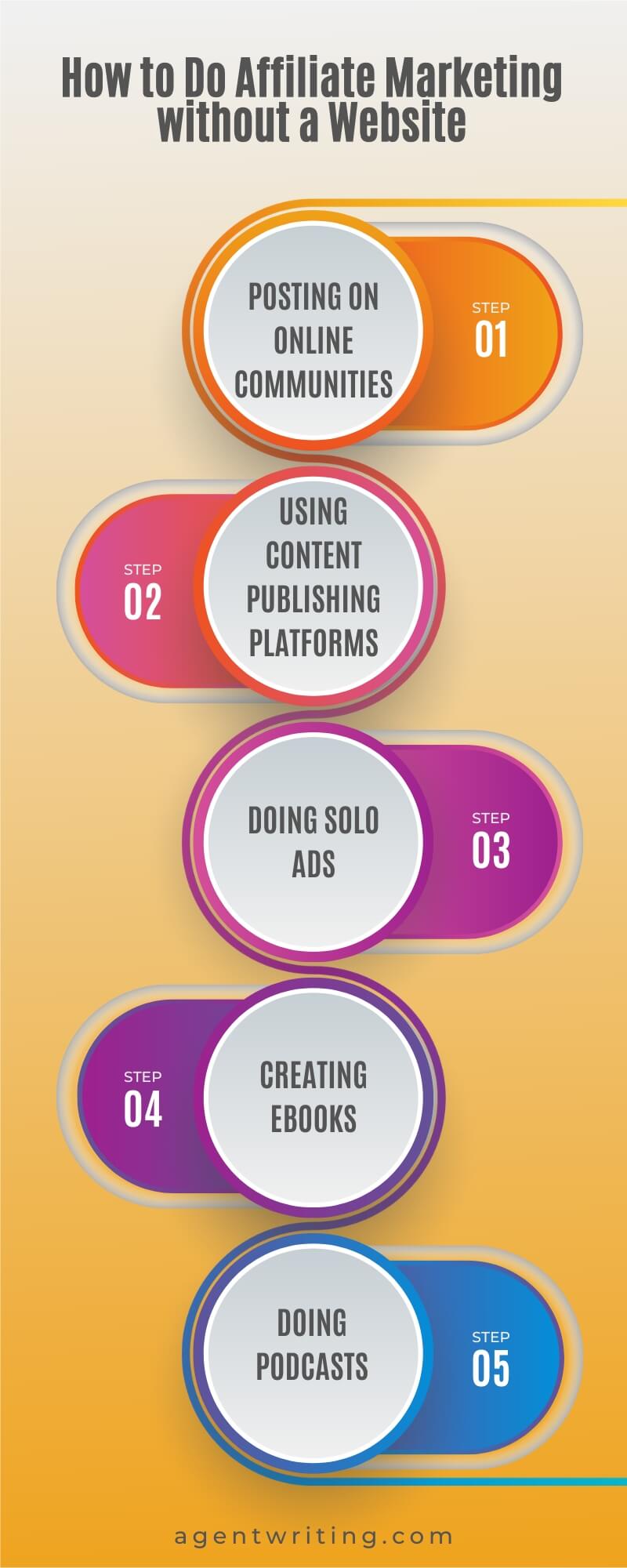
Can You Become an Affiliate Marketer Without a Website?
Yes. Many affiliate programs allow promotion through approved social media accounts, video channels, email, or other online media. However, each program sets its own rules.
Before applying, check:
- Whether the program accepts your type of channel.
- Whether your account must be public.
- Whether the program requires a minimum audience or content history.
- Where you may place affiliate links.
- Whether paid ads are allowed.
- Whether email promotion is allowed.
- Whether the program restricts coupon, trademark, or search ads.
- How and when commissions are paid.
- Whether the program has geographic restrictions.
- What disclosure language it requires.
Amazon Associates, for example, has specific rules for approved websites and social media content. The program also requires clear affiliate disclosures. Other programs may use affiliate networks such as CJ, Impact, ShareASale, or Awin, but network access does not guarantee approval for every advertiser.
A useful rule is this:
Never assume that a platform or affiliate network gives you permission to promote every offer everywhere.
Read the merchant’s program terms before publishing links. A violation can lead to withheld commissions or account closure.

How to Start Affiliate Marketing Without a Website
Follow these steps in order. Starting with a narrow topic and one main channel is usually easier than joining many programs and posting everywhere.
1. Choose a narrow topic
Pick a topic where people often compare products, seek advice, or need help solving a problem.
Good examples include:
- Home office equipment
- Budget cooking tools
- Dog training products
- Hiking gear
- Personal finance software
- Language learning apps
- Craft supplies
- Travel accessories
- Fitness equipment
- Small-business software
A narrow topic helps you create focused content. “Technology” is broad. “Affordable desk tools for remote workers” gives you a clearer audience.
Choose a topic based on three questions:
- Do people buy products in this category?
- Can you explain or demonstrate the products honestly?
- Can you create useful content about the topic for at least six months?
Avoid choosing a topic only because it appears profitable. If you do not understand the audience, your content may sound forced.
2. Select one primary platform
Choose the platform that matches your strengths and the topic.
| Platform | Works well for | Main limitation |
|---|---|---|
| YouTube | Reviews, tutorials, comparisons, demonstrations | Video takes time to make |
| TikTok | Short tips, product demonstrations, quick opinions | Content may have a short life |
| Visual products, lifestyle content, short videos | Link placement may be limited | |
| Crafts, home ideas, recipes, planning | Requires strong images and search-friendly titles | |
| Direct recommendations and repeat contact | You need permission-based subscribers | |
| Podcasting | Interviews, stories, and detailed discussions | Affiliate links can be harder to access |
| Facebook groups | Community advice and discussions | Group rules may restrict promotion |
| Business tools, services, and professional education | Consumer offers may fit less naturally |
Do not spread yourself across six platforms at the beginning. Build a repeatable process on one channel first.
3. Join relevant affiliate programs
Search for programs offered by companies that sell products your audience already needs. You can also search affiliate networks by category.
Common places to look include:
- The company’s official website
- Affiliate network directories
- Software partner pages
- Creator partnership pages
- Retailer affiliate pages
- Industry publications that list programs
Review the program terms before applying. Pay attention to commission rules, cookie periods, payment thresholds, prohibited traffic, and allowed promotional methods.
A commission rate alone does not show whether an offer is worthwhile. A product with a high commission may convert poorly, while a lower-rate product may fit your audience much better.
4. Build a public content profile
You may not need a website, but you still need a trustworthy public presence.
Complete your profile with:
- A clear name
- A short description of your topic
- A profile image or logo
- A contact method
- A link destination, if the platform permits one
- A disclosure or link to your disclosure policy
- Several useful posts before applying to programs
An empty profile can make approval harder. It also gives viewers little reason to trust your recommendations.
5. Create useful content before promoting links
Start with content that answers real questions. Do not make every post a sales pitch.
Useful formats include:
- Product comparisons
- “How to use” demonstrations
- Beginner guides
- Product alternatives
- Mistake-avoidance tips
- Before-and-after explanations
- Setup tutorials
- “Best for” recommendations
- Honest product limitations
- Maintenance and care advice
A good affiliate post should help the reader make a better decision even if they do not click your link.
For example, instead of posting “Buy this blender,” explain:
- Who the blender suits
- What it can make
- What it cannot do well
- How loud it is, if you have reliable evidence
- What features affect the price
- Which buyer should choose a cheaper option
If you have not used a product, do not imply that you have. You can summarize documented specifications and clearly identify information reported by the seller or other sources.
6. Add affiliate links in an approved way
Use the link format allowed by the affiliate program and platform. Some platforms block certain shortened links or external URLs. Others may limit links in comments, direct messages, or paid ads.
Possible link locations include:
- A YouTube description
- A permitted profile link
- An email newsletter
- A podcast show-notes page
- A Pinterest pin
- A social media post
- A community resource page
Do not place links where they look like ordinary navigation if they are actually paid recommendations. Do not hide the destination in a misleading way.
7. Add a clear disclosure
The Federal Trade Commission requires clear disclosure of material connections between endorsers and sellers. An affiliate relationship is generally a material connection because you may earn money from a purchase.
A disclosure should be:
- Easy to notice
- Close to the recommendation or link
- Written in plain language
- Clear before the reader takes action
Examples include:
- “I may earn a commission if you buy through links in this post.”
- “This post contains affiliate links. I may earn a commission at no extra cost to you.”
- “Paid link: I may earn a commission from qualifying purchases.”
Do not rely only on vague terms such as “affiliate,” “collab,” or “partner.” The FTC’s Endorsement Guides explain disclosure principles for U.S. endorsements.
Your disclosure does not excuse false claims. You still need an honest basis for what you say about a product.
8. Track clicks and conversions
Use the reporting tools supplied by the affiliate program. Record:
- Content title
- Date published
- Views or reach
- Link clicks
- Conversion count
- Commission earned
- Refunds or reversals
- Content format
- Traffic source
You can calculate a basic click-through rate like this:
Click-through rate = link clicks ÷ content views × 100
You can also calculate earnings per click:
Earnings per click = commission earned ÷ tracked clicks
These figures help you find useful patterns. For example, a post with fewer views may earn more because it reaches people who are ready to buy.
Do not judge content only by views. A large audience with little buying interest may produce less income than a smaller, focused audience.
9. Improve what works
After you have enough data, compare content by topic and format.
Ask:
- Which questions receive the most saves or replies?
- Which posts earn clicks?
- Which links produce qualified sales?
- Which products cause refunds?
- Which content attracts the right audience?
- Are viewers confused about where to find the link?
Keep the useful parts and change one factor at a time. You might test a clearer title, a stronger demonstration, a different call to action, or a better product comparison.
Do not copy a successful post word for word. Use its underlying lesson and create a new, useful version.

Best Ways to Promote Affiliate Links Without a Website
The best channel depends on the product, audience, and type of explanation required. A product that needs demonstration may work well on video. A complex business tool may work better in email or a long tutorial.
YouTube
YouTube works well for:
- Product reviews
- Tutorials
- Setup guides
- Comparisons
- Unboxing content
- Troubleshooting videos
Place permitted affiliate links in the description and mention where viewers can find them. Tell viewers that the description contains affiliate links.
Avoid making claims that your video cannot support. If you did not test battery life, durability, or long-term performance, do not present those points as personal findings.
TikTok and Instagram
Short-form video can show a product in use. Strong formats include:
- One problem and one solution
- Three features worth knowing
- A quick comparison
- A common mistake
- A short setup guide
- A realistic use case
Link access varies by account type and platform policy. Use only approved link methods. Avoid placing affiliate links in comments or direct messages if the platform or program prohibits it.
Email newsletters
Email can work well because you communicate with people who chose to hear from you. Build the list through an approved form or platform. Do not buy email lists or send commercial email without following applicable law.
In the United States, the CAN-SPAM Act sets requirements for commercial email. These include accurate header information, non-deceptive subject lines, identification of commercial messages, a physical postal address, and a working opt-out method.
Use email to teach first. A useful message might explain how to choose a standing desk, then compare two suitable options. It should not pressure readers to buy a product that does not fit their needs.
Pinterest can suit topics such as:
- Home improvement
- Recipes
- Crafts
- Travel planning
- Organization
- Fashion
- Fitness routines
Use clear titles and images that match the linked content. Do not make the pin promise something the destination does not explain.
Podcasts
Podcasts can promote products through spoken recommendations and show notes. Say the disclosure aloud when appropriate, and include it in the show notes.
Podcast promotions work best when the product fits the discussion. A random offer can reduce trust quickly.
Online communities
Forums, Facebook groups, and private communities often have strict rules against affiliate promotion. Read the rules before posting.
Answer the question first. If links are allowed, disclose the relationship. Do not enter a community only to drop links.

How to Choose Affiliate Products That Fit Your Audience
Choose products by audience fit, usefulness, evidence, and program reliability—not by commission rate alone.
Use this checklist:
- The product solves a problem your audience has.
- The price is reasonable for that audience.
- You understand the product category.
- The seller provides accurate product information.
- The affiliate program clearly explains its terms.
- The product has a reasonable return process.
- You can explain both benefits and limits.
- The promotion method is allowed.
- The offer is available to your intended audience.
- The commission does not control your recommendation.
A simple scoring method can help. Give each product a score from 1 to 5 for audience fit, trust, usefulness, content potential, and program clarity. Add the scores, but treat the result as a decision aid—not proof that the product will earn money.
| Factor | Question |
|---|---|
| Audience fit | Does your audience need this product? |
| Trust | Can you support your claims? |
| Usefulness | Does it solve a meaningful problem? |
| Content potential | Can you explain or demonstrate it well? |
| Program clarity | Are the rules and payments easy to understand? |
A product may be a poor choice even if it pays a high commission. For example, an expensive software service may offer a large payout but have strict ad rules, a long sales cycle, and a high refund rate.

How Much Does It Cost to Start Without a Website?
You can start with very little money if you use free accounts and create content with equipment you already own. However, “free” does not mean cost-free in time or risk.
Possible costs include:
- A phone or camera
- A microphone
- Video or design software
- Internet service
- Email software
- Paid promotion
- Product samples
- Business registration or tax help
- Bookkeeping tools
Do not buy products solely to create affiliate content unless the expected value justifies the cost. You can begin with products you already own, products you can discuss from reliable documentation, or products supplied under a clearly disclosed arrangement.
A simple break-even example
This is a hypothetical calculation.
Suppose you spend $120 on a microphone and software. Your average commission is $8 per qualifying sale.
Break-even sales = $120 ÷ $8 = 15 sales
This calculation does not include taxes, refunds, time, or other costs. If some sales are later reversed, you need more than 15 completed sales to recover the cost.
Affiliate income is not guaranteed. It may take time to build an audience, and some programs pay only after a minimum balance or after a return period ends.

U.S. Tax and Recordkeeping Basics
Affiliate income may be taxable income in the United States. Keep records of commissions, expenses, payment statements, and relevant business activity.
Possible records include:
- Affiliate network reports
- Payment processor statements
- Software receipts
- Equipment receipts
- Advertising costs
- Product sample costs
- Business mileage, when applicable
- Emails about program terms
- Refunds and commission reversals
The IRS provides information about gig economy tax obligations. The correct treatment depends on your facts, such as how you operate, your expenses, and whether the activity is a business.
Do not assume that no tax form means no reporting requirement. Do not treat this article as personal tax advice. A qualified tax professional can help if you have substantial income, business expenses, inventory, employees, or uncertainty about estimated taxes.
Keep personal and business records separate when practical. Good records help you understand whether your activity is actually profitable.

Common Mistakes to Avoid
Joining too many programs
More affiliate programs do not automatically create more income. Too many offers can make your content scattered and difficult to trust.
Start with a small group of products that clearly fit your topic.
Posting links without useful content
A link alone gives people little reason to click. Explain the problem, the product’s role, and the limits of the recommendation.
Hiding the affiliate relationship
Unclear disclosures can create legal and platform problems. Place a plain disclosure near the endorsement or link.
Making claims you cannot support
Do not claim that a product is the “best,” “safest,” or “number one” without a clear basis. Avoid health, financial, or performance promises that exceed the available evidence.
Ignoring platform rules
A platform may restrict commercial links, contests, direct messages, or paid promotions. Read current rules before publishing.
Buying followers or clicks
Fake engagement can harm your account and produce poor data. It may also violate platform or affiliate program terms.
Using spam comments
Repeatedly posting affiliate links in unrelated comment sections can result in removal, bans, and loss of trust.
Depending on one platform
A platform can change its reach, link rules, or account policies. Keep copies of your content and, when appropriate, build an email list through a compliant opt-in process.
Forgetting refunds and reversals
A reported commission may later be reversed because of a return, canceled order, fraud, or a program rule. Measure completed commissions, not only pending earnings.

What to Do If an Affiliate Program Rejects You
A rejection does not always mean you cannot become an affiliate marketer. It may mean the program needs more information or wants to see an established channel.
Try these steps:
- Read the rejection message carefully.
- Check whether your platform is an approved channel.
- Complete your profile.
- Publish several original, useful posts.
- Add a clear business or contact email.
- Review your content for restricted claims.
- Apply to a program that matches your channel.
- Contact the program only through its official support process.
- Reapply only when your channel has materially improved.
Do not create false websites, duplicate accounts, or misleading profiles to bypass an approval process. That can create larger problems later.
If a program requires a website, choose a different program or wait until you can meet the requirement. You do not need to force one particular merchant into your strategy.

A Practical 30-Day Starting Plan
This plan gives a beginner a manageable path without requiring a website.
Days 1–3: Pick the topic
Choose one audience and one problem area. Write down 20 questions that audience may ask.
Days 4–7: Choose the platform
Select one primary channel. Review its commercial content and link rules.
Week 2: Create your profile
Write a clear bio, add a contact method, and publish several helpful posts without affiliate links.
Week 3: Apply to suitable programs
Choose products that fit your content. Save copies of the program terms and disclosure requirements.
Week 4: Publish and measure
Create useful posts that include permitted links and clear disclosures. Track views, clicks, conversions, and reversals.
At the end of the month, do not focus only on income. Look for signs of progress:
- People ask relevant questions.
- Viewers save or share content.
- Your content earns qualified clicks.
- You understand which topics attract the right audience.
- You can explain your recommendations more clearly.
- Your disclosures and links remain compliant.
If no one clicks, check whether the offer fits the audience. If people click but do not buy, review the product, price, landing page, and intent of the audience. If your content receives little reach, improve the topic and presentation before adding more affiliate links.

FAQs About Affiliate Marketing Without a Website
Do I need followers to become an affiliate marketer?
Not always. Some programs accept new creators, while others review the quality, topic, and public activity of your channel. A small, focused audience can be more useful than a large audience with little interest in the product.
Can I use affiliate links on social media?
Often, yes, but permission depends on the platform and affiliate program. Check both sets of rules. A program may allow social promotion while a platform restricts certain link types, paid ads, or direct messages.
Can I promote affiliate products with paid ads?
Sometimes. Many programs restrict trademark bidding, direct linking, brand keywords, or certain ad platforms. Read the paid traffic terms before spending money. If the rules are unclear, ask the program directly.
Can I use affiliate links in email?
Some programs allow email promotion, and others prohibit it or require pre-approval. Use permission-based email practices and follow applicable U.S. commercial email rules.
How long does it take to make money with affiliate marketing?
There is no fixed timeline. Results depend on the topic, content quality, audience intent, platform reach, offer fit, and consistency. Treat early work as a process of learning what your audience needs rather than as guaranteed income.
Final Takeaway
You can start affiliate marketing without a website by using an approved platform, creating useful content, joining relevant programs, adding clear disclosures, and tracking results.
Start with one topic, one main channel, and a small set of products. Follow the rules of the Federal Trade Commission, each affiliate program, and each platform. Build trust before trying to scale.
Your next step is to choose one audience problem, list five products that may solve it, and check whether their affiliate programs allow promotion on your chosen channel.


