

How To Pick A Niche For Affiliate Marketing: Simple Guide
The best affiliate marketing niche is not simply the topic with the highest commission. It is a focused market where you can help a clear group of U.S. buyers solve real problems, find suitable products, and make informed choices.
To pick one, check five things:
- You understand the audience and its problems.
- People spend money in the market.
- Relevant affiliate programs are available.
- You can create useful content for at least one year.
- You can compete through a clear angle, not just broad keywords.
A good niche sits where interest, buyer demand, content opportunity, and trust meet. This guide explains how to find that point and test it before you invest months of work.

What Is an Affiliate Marketing Niche?
An affiliate marketing niche is a focused topic, audience, or problem area where you publish content and recommend relevant products or services through affiliate links.
For example:
- “Fitness” is a broad market.
- “Home workouts for busy parents” is a narrower niche.
- “Adjustable dumbbells for small apartments” is a focused sub-niche.
- “Quiet adjustable dumbbells for apartment workouts under $300” is an even clearer content angle.
When a reader clicks your affiliate link and completes a qualifying action, such as buying a product or starting a subscription, you may earn a commission.
Your niche affects:
- The people you attract
- The products you can promote
- The keywords you target
- The content you publish
- The legal disclosures you need
- The level of trust your site must earn
- The amount of competition you face
A niche is not the same as a single product. A product can disappear, change price, or lose its affiliate program. A strong niche gives you room to cover several products, use cases, problems, and buyer stages.
Broad niches versus focused niches
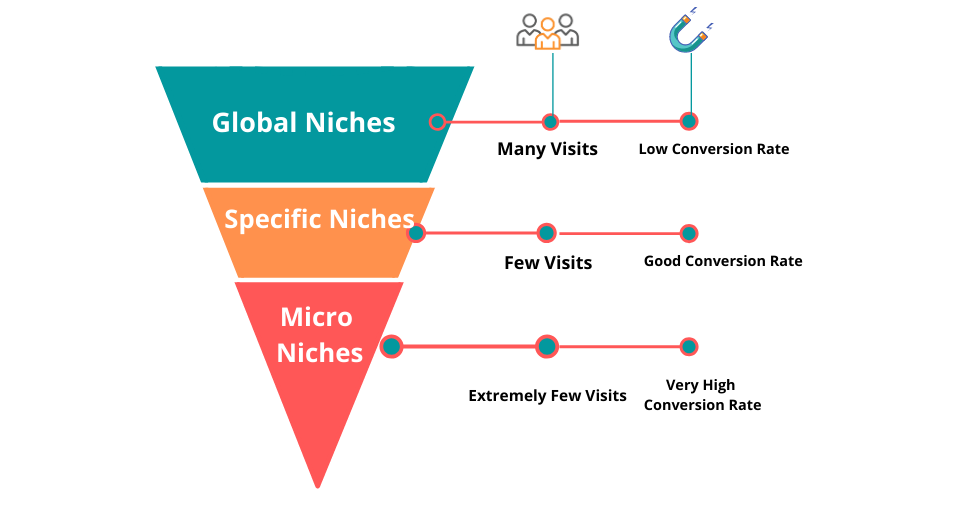
Broad niches can attract more potential visitors, but they often have heavy competition and unclear audiences. Focused niches usually have fewer possible readers, but those readers may have stronger needs and clearer buying intent.
| Broad market | Focused niche | Example buyer need |
|---|---|---|
| Personal finance | Budgeting for new military families | Build a budget after a relocation |
| Home improvement | Tools for first-time condo owners | Complete small repairs with limited storage |
| Travel | Carry-on travel for frequent U.S. business flyers | Pack efficiently for short work trips |
| Pets | Joint-support products for older large dogs | Compare food, supplements, and mobility aids |
| Technology | Ergonomic home-office gear for remote workers | Improve comfort in a small workspace |
A focused niche does not need to stay tiny. You can start with one clear problem and expand after you learn what your audience needs.
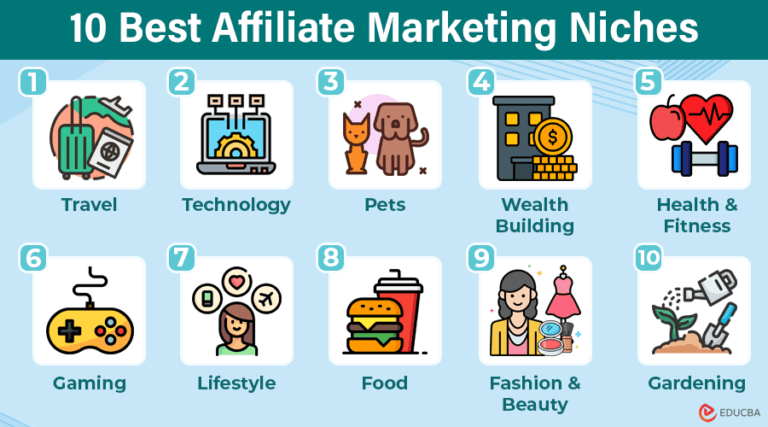
How to Choose a Niche for Affiliate Marketing
Choose a niche by scoring its audience, demand, monetization, competition, content depth, and personal fit. Do not rely on passion alone or select a market only because it has high commissions.
Use the following process.
1. Start with problems, not products
Products change quickly. Problems tend to last longer.
Instead of starting with “What can I sell?” ask:
- What does this audience struggle to do?
- What costs them time or money?
- What do they compare before buying?
- What makes the choice confusing?
- What products or services can solve the problem?
- What mistakes could cause wasted money or poor results?
For example, “coffee machines” is a product category. A more useful niche may be:
Compact coffee equipment for people who want café-style drinks in small U.S. apartments.
That angle creates several content paths:
- Compact espresso machine comparisons
- Coffee grinders for small kitchens
- Milk frothers for beginners
- Noise levels in apartment buildings
- Cleaning and maintenance guides
- Coffee equipment under a set budget
2. Identify one primary audience
A niche becomes easier to serve when you know who the reader is.
Define the audience by using details such as:
- Age or life stage
- Location, when it changes the buying decision
- Skill level
- Budget
- Main goal
- Common frustration
- Products already owned
- Reason for delaying a purchase
For a U.S.-based affiliate site, location may affect:
- Prices in U.S. dollars
- Shipping availability
- Electrical standards
- Product warranties
- State rules
- Health care or financial products
- Tax treatment
- Retailer availability
Do not narrow the audience so much that you cannot find enough topics. “Women aged 31 to 33 who live in one specific city” may be too narrow unless you have a strong reason. “First-time home buyers in the United States” gives you more room.
3. Find signs of commercial intent
Commercial intent means the reader may be close to taking an action that could produce a commission.
Useful search patterns include:
- Best [product] for [audience]
- [Product A] vs. [Product B]
- [Product] alternatives
- [Product] review
- Is [product] worth it?
- [Product] under $[amount]
- [Product] for beginners
- Where to buy [product]
- [Service] pricing
- [Service] coupon or free trial
Informational topics also matter. A reader may first search for “how to organize a small home office” and later search for a desk, lamp, or chair.
A balanced niche usually has both:
- Informational content: answers questions and builds trust
- Commercial content: helps readers compare or choose products
4. Confirm that people spend money
Interest alone does not prove affiliate potential. A profitable niche needs products or services that people buy.
Look for several price levels:
- Low-cost products for easy entry
- Mid-priced products with useful commission potential
- Higher-priced products or services for larger commissions
Do not assume that expensive products are always better. High prices can reduce conversion rates. A lower-priced product may earn more total revenue if it fits the audience and converts more often.
Check demand through:
- Retailer category pages
- Product review sites
- Brand websites
- Affiliate networks
- Search results
- Online communities
- YouTube and podcast topics
- Industry reports
- Public company or trade data, when relevant
Avoid treating search volume tools as proof of sales. Search volume can show interest, but it cannot tell you whether visitors trust the content or buy the product.
5. Check affiliate program quality
A niche can look attractive but still be difficult to monetize if programs have poor terms.
Review each program for:
- Commission rate or fixed payout
- Cookie duration
- Payment threshold
- Accepted traffic sources
- Product return rules
- Geographic restrictions
- Brand reputation
- Link tools and reporting
- Program stability
- Restrictions on paid search or email promotion
Program terms can change. Check the current agreement before building a business plan around one retailer.
Do not depend on a single affiliate program. If one brand ends its program, your site should still have other relevant options.
6. Assess the competition by content quality
High competition does not always mean “do not enter.” It means you need a clear way to help readers better.
Review the first page of results for several important searches. Look for:
- Thin product summaries
- Outdated pricing
- Missing U.S. buying information
- Weak comparison tables
- No explanation of who each product suits
- No discussion of limitations
- Poor answers to beginner questions
- Claims without clear testing or documentation
- Content that recommends products without explaining the decision
You do not need to beat every large website. You may compete by serving a narrower audience or solving a neglected problem.
For example, “best office chairs” is broad. A stronger angle might be:
- Office chairs for short users
- Office chairs for tall users
- Chairs for shared home offices
- Chairs for people with small rooms
- Office chairs with replaceable parts
- Budget chairs with adjustable seat depth
7. Test whether you can create enough content
A good niche should support many related topics without forcing repetition.
Try building five content groups:
- Beginner guides
- Product comparisons
- Buying guides
- Problem-solving articles
- Maintenance or follow-up content
If you can create only three weak article ideas, the niche may be too narrow. If you can create 100 unrelated ideas, it may be too broad.
A useful test is to list at least 30 realistic topics. Each topic should help the same audience rather than simply contain the same keyword.

Use a Niche Scoring System
A scoring system helps reduce emotional decisions. It will not predict earnings, but it can expose weak points before you commit.
Score each niche from 1 to 5:
| Factor | Score 1 | Score 3 | Score 5 |
|---|---|---|---|
| Audience clarity | Very broad | Somewhat clear | Easy to define |
| Buyer demand | Few paid products | Some buyer activity | Many useful products and services |
| Affiliate access | Few or poor programs | Several options | Strong, varied programs |
| Content depth | Few useful topics | Moderate range | Many related questions |
| Competition | Dominated by major sites | Mixed | Clear openings for focused content |
| Personal fit | Little knowledge | Some interest | Strong knowledge or willingness to learn |
| Trust burden | High-risk claims | Moderate care needed | Low-risk product guidance |
| Long-term stability | Trend may fade | Uncertain | Ongoing need |
You can calculate a simple average:
Niche score = total points ÷ number of factors
Example niche comparison
This is a hypothetical example, not a forecast of earnings.
| Niche | Audience | Products | Content depth | Competition | Trust burden | Average |
|---|---|---|---|---|---|---|
| General fitness | 2 | 5 | 5 | 1 | 2 | 3.0 |
| Home workouts for beginners | 4 | 4 | 5 | 3 | 3 | 3.8 |
| Workout gear for small apartments | 5 | 4 | 4 | 4 | 3 | 4.0 |
The third niche may offer a clearer starting point. It has a defined audience, strong product relevance, and several content paths.
Do not treat the highest score as an automatic winner. A niche with medical, legal, or financial consequences needs more careful research and stronger qualifications, even if it has high commercial demand.

Choose a Niche You Can Cover With Authority
Authority does not require formal credentials for every topic. It does require honesty about what you know, what you researched, and what you cannot safely advise.
A niche is easier to cover well when you can:
- Explain basic concepts clearly
- Compare products using relevant criteria
- Read product specifications
- Check official documentation
- Interview qualified sources when needed
- Share original photos or demonstrations, when available
- Update information as products change
- Admit when evidence is limited
Some topics require extra care.
Health and wellness
Health content may affect treatment decisions. Do not present general product information as medical advice. Avoid unsupported claims about curing, preventing, or treating disease.
Use reliable sources such as:
- The U.S. Food and Drug Administration
- The Centers for Disease Control and Prevention
- The National Institutes of Health
- Professional medical organizations
- Product labels and official instructions
Readers should speak with an appropriate health professional for personal medical decisions.
Personal finance
Finance content may involve real losses. Distinguish general education from personalized financial, tax, or legal advice.
Check primary sources such as:
- The Consumer Financial Protection Bureau
- The Federal Trade Commission
- The Internal Revenue Service
- State regulators
- Official bank or brokerage documents
Be careful with claims about returns, savings, approval, credit scores, taxes, and risk.
Legal, safety, and technical products
Tools, electrical products, child products, and safety equipment need accurate specifications. Use official manuals, recognized standards, and manufacturer instructions where appropriate.
Never encourage readers to bypass safety instructions to complete a product recommendation.

Pick a Clear Affiliate Niche Angle
Your niche angle explains why a reader should choose your site instead of a general review page.
Strong angles often focus on one of these:
- A specific audience
- A specific budget
- A specific setting
- A specific skill level
- A specific use case
- A specific product limitation
- A specific buying standard
Examples of clearer angles
| General topic | More useful angle |
|---|---|
| Camping gear | Lightweight camping gear for weekend car campers |
| Skincare | Simple skincare for people with sensitive skin |
| Baking | Baking tools for small kitchens |
| Running | Running shoes for new runners who train on pavement |
| Home security | Security devices for renters who cannot drill into walls |
| Gardening | Container gardening for U.S. apartment balconies |
A clear angle should guide your content, not make unsupported promises.
For instance, “the safest baby products” is too broad and may imply a level of testing you cannot prove. “Baby products with clear safety instructions and easy-to-check specifications” is more precise.

Validate the Niche Before Building a Website
Validation means testing whether the niche has real content and monetization opportunities before you spend heavily on design, tools, or paid promotion.
Use this five-part validation process.
Step 1: Build a topic map
Create a spreadsheet with columns for:
- Topic
- Search intent
- Audience problem
- Product or service involved
- Possible affiliate program
- Evidence needed
- Competition level
- Planned content format
Group topics into clusters. A cluster might include a main guide, comparison articles, product reviews, and troubleshooting posts.
Step 2: Review real products
Open retailer and brand pages. Check whether products:
- Are currently sold in the United States
- Have clear specifications
- Serve different budgets
- Have meaningful differences
- Come from more than one brand
- Have reasonable return and warranty information
If every product is nearly identical, useful comparison content may be difficult.
Step 3: Examine reader questions
Look at questions from:
- Product reviews
- Community discussions
- YouTube comments
- Retailer Q&A sections
- Support documents
- Search suggestions
- Customer complaints
These sources reveal confusion and unmet needs. They do not automatically prove that a claim is true. Use them to find questions, then verify answers through reliable evidence.
Step 4: Publish a small test set
Start with a useful group of articles rather than dozens of shallow pages. A practical test set could include:
- One beginner guide
- Two buying guides
- Two product comparisons
- Two problem-solving articles
- One transparent review or hands-on article, if you actually tested the product
Set a reasonable review period. Early traffic can be slow, and one article rarely proves a niche is viable.
Step 5: Measure useful signals
Track:
- Search impressions
- Click-through rate
- Organic visits
- Affiliate link clicks
- Conversion data, when available
- Email sign-ups
- Comments and questions
- Returning visitors
- Content update needs
Do not judge a niche only by page views. A smaller audience with strong buying intent may matter more than large traffic with no commercial relevance.
Understand Affiliate Economics Before You Commit
Affiliate income depends on more than commission rate.
A simple planning model is:
Estimated revenue = qualified visitors × affiliate click rate × purchase rate × average commission
This is a hypothetical planning formula. It is not a guaranteed result.
For example:
- 10,000 monthly visitors
- 10% click an affiliate link
- 3% of those clicks lead to a qualifying purchase
- $8 average commission
Calculation:
10,000 × 0.10 × 0.03 × $8 = $240 per month
Actual results can differ because of product price, device use, tracking limits, returns, seasonality, and audience trust.
What makes a niche financially attractive?
A niche may be stronger when it has:
- Several relevant products
- Repeat purchase opportunities
- Services with recurring commissions
- Products at different price points
- Seasonal and evergreen demand
- Clear comparison criteria
- More than one reliable merchant
However, recurring commissions are not automatically better. A service with a high cancellation rate may produce less long-term value than a lower-paying product that customers keep.
Watch for hidden costs
Include costs such as:
- Website hosting
- Domain registration
- Email software
- Content production
- Product samples
- Research tools
- Editing
- Legal review when needed
- Advertising, if used
- Tax preparation
Do not buy products only to create reviews unless the likely value justifies the cost. You can often begin with documented comparisons, but label the difference between research and hands-on testing.

Follow U.S. Affiliate Disclosure Rules
If you earn from affiliate links, disclose the relationship clearly. The Federal Trade Commission says endorsements and affiliate relationships should be disclosed when the connection could affect how people evaluate the recommendation.
A disclosure should be:
- Easy to notice
- Close to the recommendation or link
- Written in plain language
- Understandable before the reader acts
A short example:
This article contains affiliate links. If you buy through one of these links, we may earn a commission at no extra cost to you.
A disclosure alone does not make a misleading claim acceptable. Your content should still reflect honest opinions and reliable support.
Avoid:
- Hiding disclosures in a footer
- Calling a paid placement an independent recommendation
- Claiming personal use when you did not test the item
- Making unsupported health or financial claims
- Using fake scarcity or false price claims
- Copying manufacturer claims without checking their limits
Review the current FTC Endorsement Guides before publishing. Affiliate network terms may add more requirements.

Common Mistakes When Choosing an Affiliate Niche
Choosing a niche only because commissions are high
High commissions attract competition. They may also come with strict advertising rules, long sales cycles, refunds, or difficult customer decisions.
Choose a market where you can explain the buyer’s problem and product trade-offs.
Picking a topic that is too broad
A broad site may lack a clear audience. Start with a focused group or use case, then expand after you gain evidence.
Confusing personal interest with buyer demand
Passion helps you stay consistent, but it does not prove that people want to buy. Confirm that the market has products, questions, and commercial searches.
Depending on one retailer
Programs close, terms change, and products go out of stock. Build content around the reader’s problem and include suitable alternatives.
Publishing product claims without evidence
Do not claim that a product is “best,” “safe,” “durable,” or “effective” without defining the basis. Use specifications, official documents, direct testing, or clearly attributed third-party evidence.
Ignoring updates
Prices, inventory, software support, warranties, and affiliate terms can change. Create a review schedule for pages that include time-sensitive information.
Entering a high-risk topic without the needed knowledge
Medical, financial, legal, and safety content can harm readers when written carelessly. If you cannot research and qualify the topic properly, choose a lower-risk niche or work with a qualified reviewer.

Frequently Asked Questions
What is the most profitable affiliate marketing niche?
There is no single most profitable niche for every publisher. The strongest opportunity depends on audience demand, product value, commission terms, competition, content quality, and your ability to earn trust.
A smaller niche can outperform a broad market when it has a clear audience and strong buying intent.
Should I choose a niche based on my passion?
Passion can help you keep publishing, but it should be one factor rather than the deciding factor. Confirm that the niche has buyers, useful products, affiliate programs, and enough questions to support ongoing content.
How narrow should my affiliate niche be?
Start narrow enough to define the reader and their problem, but broad enough to support several content groups and product categories.
A niche such as “budget travel gear for solo travelers” may be workable. “One exact brand of one product for one tiny audience” may be too narrow unless it has a strong and stable market.
Can I promote products from different niches on one website?
You can, but unrelated topics may confuse readers and weaken the site’s purpose. Keep products connected by a common audience or problem.
For example, camping cookware, tents, and portable power stations can fit one outdoor gear site. Camping gear, tax software, and pet food usually need separate sites or clearly separate brands.
How long should I test a niche?
Test the niche long enough to publish useful content, collect search data, and learn whether readers click or buy. A short period may show early interest, but it may not capture seasonal demand or the time needed for search visibility.
Use milestones such as a completed topic map, consistent publishing, affiliate clicks, reader questions, and content updates instead of relying on one traffic deadline.

A Practical Niche Selection Checklist
Before choosing your niche, answer “yes” to most of these questions:
- Can I name the primary audience in one sentence?
- Can I describe its main problem?
- Do people buy products or services related to that problem?
- Can I find at least three suitable affiliate programs or merchants?
- Can I list 30 useful content topics?
- Can I explain how products differ?
- Can I support important claims with reliable evidence?
- Can I create content without pretending to have tested products?
- Can I disclose affiliate relationships clearly?
- Can I handle price, availability, and program changes?
- Is the niche safe for my level of knowledge?
- Do I have a clear angle that is narrower than the general market?
If several answers are “no,” refine the niche before launching.

Final Recommendation
The best way to pick a niche for affiliate marketing is to begin with a specific audience problem, then test the market for products, content depth, affiliate access, competition, and trust requirements.
Use a scoring sheet to compare ideas. Choose a niche with several reliable monetization paths, not just one attractive commission. Start with a focused angle, publish genuinely useful content, track reader behavior, and expand only after the data supports it.
Your next action is simple: write down three possible niches, score each one from 1 to 5 across the eight factors in this guide, and build a 30-topic map for the strongest option. If you cannot find enough useful topics or credible products, move to the next idea before spending money on a website.
Sources and Further Reading
- Federal Trade Commission: Endorsements, Influencers, and Reviews
- Federal Trade Commission: Advertising and Marketing Basics
- U.S. Food and Drug Administration: Consumer Health Information
- Centers for Disease Control and Prevention
- Consumer Financial Protection Bureau
- Internal Revenue Service: Small Business and Self-Employed Tax Center

