
How To Prevent Affiliate Fraud In Marketing Campaigns: Quick Tips
Use vetting, contracts, real-time monitoring, layered tech, and strict payout controls.
Fraud drains budgets, skews data, and hurts trust. I’ve led affiliate programs across ecommerce and SaaS, and I’ve seen what works. This guide breaks down how to prevent affiliate fraud in marketing campaigns with a clear plan, simple tools, and hard-won lessons you can act on today. Read on to protect your spend and keep honest partners rewarded.

What is affiliate fraud and why it threatens your ROI
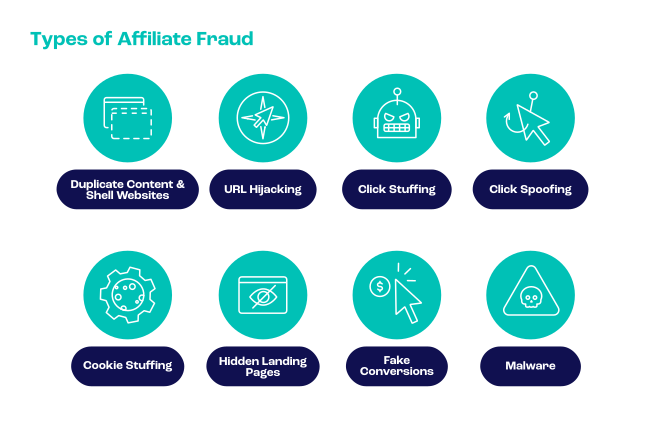
Affiliate fraud is any tactic that fakes clicks, leads, or sales to trigger payouts. It shows up as bot traffic, incentivized signups, stolen coupons, fake installs, or chargeback loops. When it slips in, your ROI drops and good affiliates get crowded out.
Knowing how to prevent affiliate fraud in marketing campaigns starts with definitions. Cookie stuffing places a cookie without a real referral. Pixel stuffing fires a conversion on a hidden pixel. Brand bidding hijacks your trademarks to steal last-click credit. Each pattern needs its own control.
Beyond wasted spend, fraud warps your data. Your LTV looks strong when refunds lag. Your best channels get underfunded because “affiliate” inflated last-click. Fixing the root keeps your model honest and your growth efficient.
Source: seon.io
Red flags: how to spot suspicious affiliate activity early
Fraud leaves clues. Learn the patterns, then act fast when you see them.
Watch these signals in your reporting
- Abnormal click-to-conversion times that cluster in seconds instead of minutes or hours.
- High click-through rates with low on-site engagement and short sessions.
- New buyer spikes from one ISP, IP range, or device fingerprint.
- Orders that bunch at odd hours or exactly on the hour.
- Coupon use on full-priced products that never get discounted.
- Sudden jumps in returns, chargebacks, or refund requests tied to one partner.
Know the common schemes
- Bot clicks and emulator traffic inflate clicks and EPC without real users.
- Lead fraud uses throwaway emails, fake phone numbers, or data farms.
- Ad injection and toolbar hijacking overwrite cookies at checkout.
- Brand bidding on your trademarks steals last-click credit.
- Incentivized installs or signups hit volume targets but churn fast.
When you see one of these, pause payouts for that affiliate and review the logs. This is the most direct start to how to prevent affiliate fraud in marketing campaigns.

Source: mfilterit.com
Core prevention strategy: build a multi-layer fraud defense
There is no single silver bullet. You need layers that work together.
Start with strong program design
- Vet affiliates during onboarding with a form that asks for sites, traffic sources, and regions.
- Use contracts with clear traffic rules, brand bidding bans, and audit rights.
- Add payout holds of 30–45 days for new partners and risky traffic.
Harden your tracking
- Use server-to-server postbacks to confirm conversions, not just client-side pixels.
- Validate clicks with timestamp, IP, user agent, and referrer checks.
- Set frequency caps on clicks and conversions per device or IP.
Filter junk before it reaches your CRM
- Add CAPTCHAs, double opt-in, and email verification to lead forms.
- Block known data centers, VPNs, and bad ASNs with IP intelligence.
- Use device fingerprinting to spot repeated devices across many “users.”
Tighten conversion validation
- Require minimum session time, page depth, or funnel steps before approval.
- Reject orders where billing and IP geo do not match your allowed regions.
- Auto-quarantine conversions that trigger chargebacks or rapid refunds.
Control money flow
- Pay by approved conversion only, not by click.
- Tier commissions by quality, LTV, and refund rate.
- Audit top 10% and bottom 10% of affiliates each month.
This layered approach is the core of how to prevent affiliate fraud in marketing campaigns. It cuts bad traffic and keeps good partners happy.
.gif)
Source: everflow.io
Tools and tech stack that help stop fraud
Choose tools that fit your size and risk. You do not need everything on day one.
Helpful categories to consider
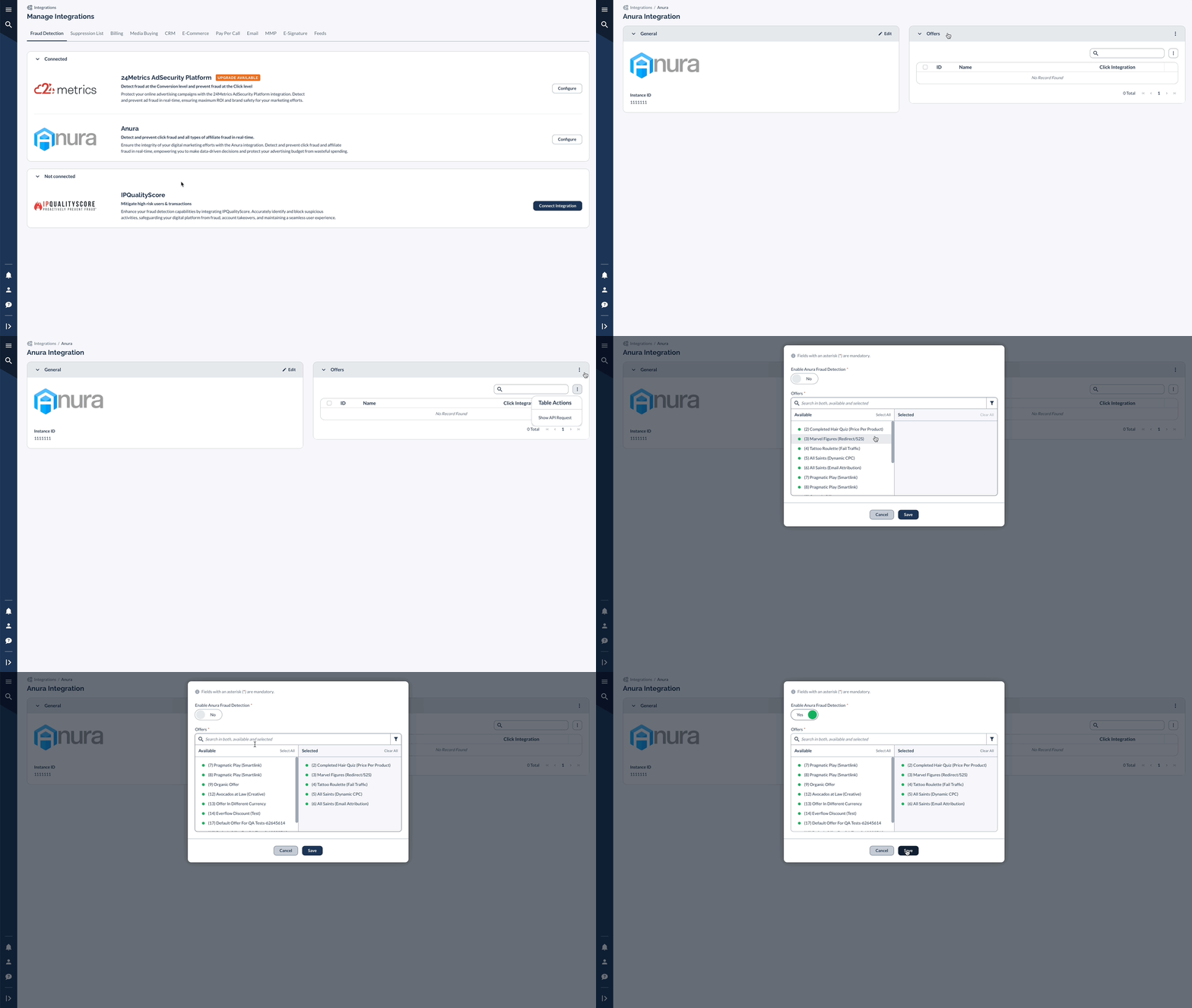
- Affiliate platforms with S2S tracking, click validation, and fraud scoring.
- Mobile attribution tools that detect install fraud and SDK spoofing.
- Bot detection and WAF services that block automated clicks and form fills.
- Device fingerprinting to track devices across affiliates and offers.
- Log analytics to query click and conversion anomalies fast.
- Coupon and attribution tools to manage last-click and protect branded terms.
Map tools to your top risks. If brand bidding is common, use trademark monitoring and search term reports. If leads are weak, invest in verification. This focused mix is how to prevent affiliate fraud in marketing campaigns without bloating your stack.
Source: usercentrics.com
Data and analytics: KPIs to monitor weekly
Simple metrics catch complex schemes. Look for breaks in normal patterns.
Track quality and risk
- Approval rate by affiliate, by GEO, and by device.
- Chargeback and refund rate within 30 and 60 days.
- Average order value and SKU mix shifts after a new partner joins.
Watch timing and source
- Median time from click to conversion; flag sub-10 second spikes.
- Click and conversion velocity per IP, ASN, or device ID.
- New vs returning buyers and the share of first-time coupon users.
Tie performance to value
- LTV by affiliate versus paid search and organic.
- Churn within 14 days for trial or subscription offers.
- Post-purchase engagement like logins or feature use.
Create simple alerts. For example, ping when one partner drives 20% of orders in a day, or when the median time-to-purchase drops by half. Building these habits is how to prevent affiliate fraud in marketing campaigns before it scales.
Source: everflow.io
Workflow: a 30-60-90 day plan to prevent affiliate fraud in marketing campaigns
Day 0–30
- Update terms with banned traffic, brand rules, and audit rights.
- Turn on S2S postbacks, email verification, and basic bot filters.
- Add payout holds for new affiliates and set manual review for risky GEOs.
Day 31–60
- Build anomaly alerts for time-to-conversion, EPC swings, and refund spikes.
- Add device fingerprinting and IP intelligence to block VPNs and data centers.
- Run a compliance sweep of top partners with screenshots and test clicks.
Day 61–90
- Tier commissions by quality and lifetime value.
- Automate quarantine rules for fast refunds and duplicate device IDs.
- Review and exit low-quality partners; invite proven ones to private offers.
This simple plan gives you a strong start on how to prevent affiliate fraud in marketing campaigns without stalling growth.

Source: affiversemedia.com
Policies, legal, and compliance: protect your program
Clear rules reduce gray areas and speed up action when needed.
Write precise terms
- Define prohibited sources like bots, incentivized traffic, and ad injection.
- Ban trademark bidding, typo-squatting, and coupon poaching.
- Require disclosure for influencers and clear placement for links.
Add enforcement power
- Include make-good and clawback rights for invalid traffic.
- Keep audit rights for logs, placements, and sub-affiliate lists.
- Set notice periods and termination causes for repeated offenses.
Train your team to enforce with consistency and documentation. This policy base is part of how to prevent affiliate fraud in marketing campaigns and defend your decisions if challenged.
Real-world lessons from my programs
When I took over a mid-sized ecommerce program, refunds spiked after a holiday sale. We paused two affiliates, added a 30-day hold, and turned on S2S postbacks. Chargebacks dropped, and we saved budget for partners who were clean.
Another time, leads looked great but sales never came. Time-to-conversion was under 15 seconds, and many emails bounced. We added double opt-in, blocked a VPN range, and the problem stopped overnight.
My biggest mistake was trusting volume without checks. Now, I start small, test quality, and scale only with clean data. That habit is central to how to prevent affiliate fraud in marketing campaigns and keep peace with finance.

Source: trafficguard.ai
Frequently Asked Questions of how to prevent affiliate fraud in marketing campaigns
What is the fastest way to start preventing affiliate fraud?
Turn on server-to-server postbacks and add a payout hold for new partners. Then set alerts for odd spikes in time-to-conversion and refunds.
How do I handle sub-affiliates I cannot see?
Require written approval for sub-affiliate use and ask for a list of IDs. Track sub-source parameters so you can block bad actors fast.
Which metrics catch fraud the most?
Time-to-conversion, approval rate by GEO, and refund or chargeback rate surface issues. Device and IP duplication also reveal repeated abuse.
Should I ban incentivized traffic completely?
For trials and lead-gen, yes in most cases. For ecommerce, you can allow it with strict rules and lower payouts, but monitor churn and returns.
How can I keep good affiliates happy while tightening rules?
Be clear about standards, share quality reports, and pay on time. Offer private offers and higher tiers to partners who pass your checks.
Conclusion
Fraud will test every affiliate program, but it does not need to win. Build layers, measure what matters, and act fast when patterns break. That steady system is how to prevent affiliate fraud in marketing campaigns and grow with confidence.
Start today. Audit your top partners, add S2S tracking, and set two smart alerts. If this helped, subscribe for more hands-on guides, or leave a comment with your next question.
My Best Recommended & Proven Way to Make $5k to $10k Every Month—Get Started Here >>



One Comment