
How To Start Affiliate Email Marketing: Complete Guide 2026
Pick a niche, build a clean list, send helpful sequences, and track affiliate links.
If you want to learn how to start affiliate email marketing, you are in the right place. I’ve run growth campaigns for brands and solo creators, tested dozens of tools, and learned what works. In this guide, I will show the exact steps, pitfalls, and proven tactics so you can launch with confidence and scale with clarity. Read on to build a simple, ethical system that converts readers into buyers.
What is affiliate email marketing?
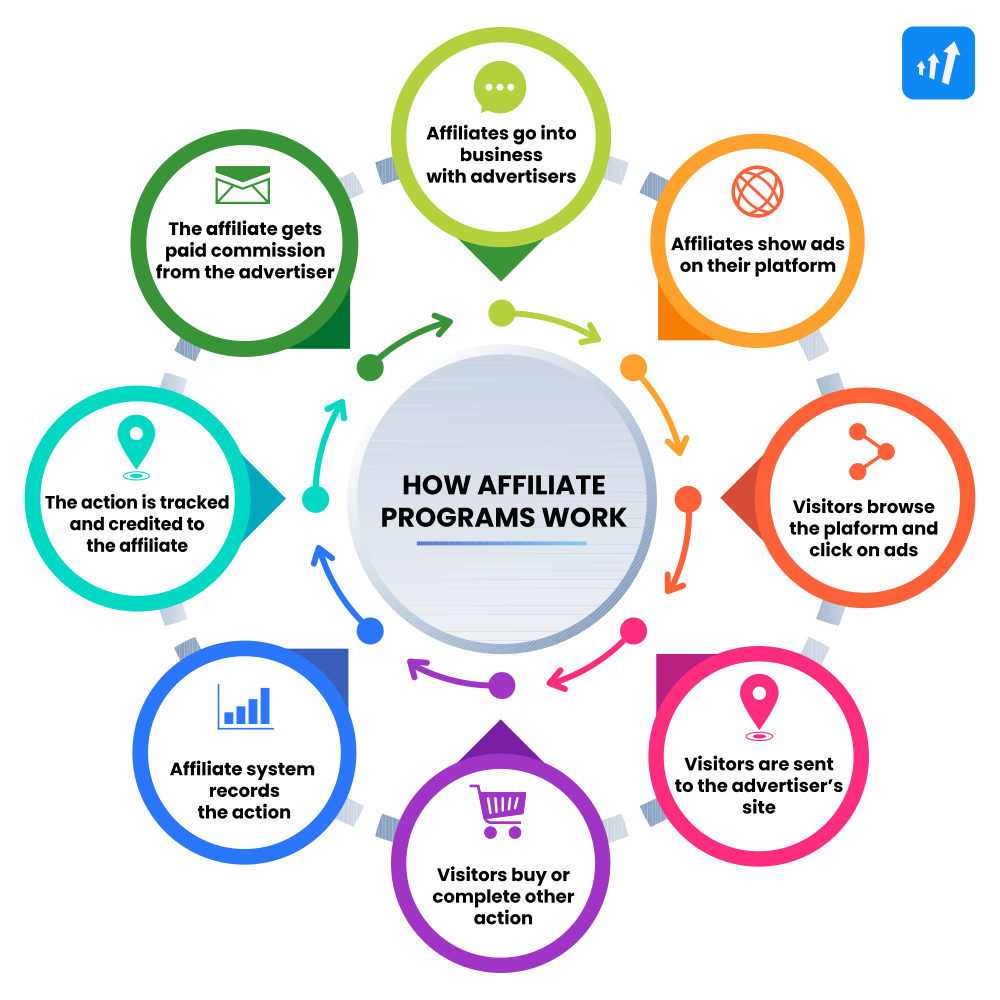
Affiliate email marketing is the process of building an email list, sending helpful content, and promoting curated products with affiliate links. You earn a commission when a subscriber buys through your link. The key is trust. You help first, sell second, and keep your list clean and engaged.
Here’s how it works in plain terms:
- You choose a niche and offers that solve real problems.
- You collect emails with a simple lead magnet and landing page.
- You send a sequence that teaches, nurtures, and recommends.
- You track clicks, sales, and improve over time.
Step 1: Pick a profitable niche and offer strategy
Choose a niche where you can add real value. It should be specific, with urgent problems and clear outcomes. Your unique experience helps. People buy from voices they trust.
How to shortlist:
- Map your skills, results, and interests.
- Research pain points in forums and communities.
- Check if people spend money there.
- Verify demand with keyword tools and social groups.
Offer selection tips:
- Start with mid-priced offers for faster wins.
- Mix one core evergreen offer with two backups.
- Compare commission rates, cookie windows, and EPC.
- Look for clean landing pages, fast load speed, and proven copy.
Where to find offers:
- Direct vendor programs on product sites.
- Networks like those for software and digital goods.
- Creator partnerships with unique coupon codes.

Step 2: Stay compliant and build trust
Compliance protects you and your list. It also lifts your sender reputation.
Key rules to follow:
- Give clear consent at opt-in. Use double opt-in when you can.
- Always include your business address and an unsubscribe link.
- Disclose affiliate relationships in each email. Keep it short and clear.
- Respect data laws. Store consent logs. Honor deletion requests fast.
Trust boosters:
- Set expectations at signup. State email frequency and topics.
- Use a real name and reply-to address. Answer replies.
- Share wins and losses. Show proof when you can.
Step 3: Set up your email stack
Good tools make how to start affiliate email marketing smooth and stable.
Pick an email service provider:
- Choose one that allows affiliate links with proper content.
- Look for solid deliverability, automation, and tagging.
- Start lean. You can switch later if you outgrow features.
Technical setup checklist:
- Use a branded sending domain. Avoid free domains for sending.
- Add SPF, DKIM, and DMARC DNS records.
- Warm your domain. Ramp up sends over 2 to 4 weeks.
- Set a clean from name and test your reply-to.
Nice-to-have tools:
- A page builder for fast landing pages.
- A link tracker with UTM tags and conversion flags.
- A basic CRM or tagging system inside your ESP.
Step 4: Build your email list the right way
Ethical list building is your edge. It keeps spam complaints low and clicks high.
Create a lead magnet:
- Pick one problem. Promise one clear result.
- Use a short guide, checklist, or calculator.
- Offer a quick win in 10 minutes or less.
Landing page basics:
- One headline. One benefit. One call to action.
- No leaks. Remove menu links and extra buttons.
- Add 3 short bullets and a small trust hint.
List growth channels:
- Blog posts and SEO content with inline opt-ins.
- Social posts, reels, and short videos with link-in-bio.
- Guest posts, webinars, or simple partnerships.
- Low-budget ads to test angles and hooks.
Always write this on your form:
- What they get.
- How often you email.
- That you send affiliate recommendations.

Step 5: Plan your funnel and cadence
A simple funnel beats a complex one you never launch. Here is a clean start for how to start affiliate email marketing.
Seven-email starter sequence:
- Email 1: Welcome and quick win. Deliver the lead magnet. Set expectations.
- Email 2: Problem and myth. Reframe the pain. Light CTA to a related article.
- Email 3: Teach one tip. Soft link to a free tool or demo.
- Email 4: Case or story. Show a real example. Link to your main offer.
- Email 5: Objections. Answer the top three. Add proof and a gentle CTA.
- Email 6: Offer. Clear benefit, bonus, and deadline if real.
- Email 7: Last call. Recap value. Invite replies for help.
Cadence:
- During the sequence: send every 1 to 2 days.
- After: one newsletter per week with a blend of tips and selective promos.
Copy that sells without being salesy
Write like a helpful friend. Keep it short. Use one clear idea per email.
Subject lines:
- Focus on curiosity or a clear outcome.
- Keep it under 50 characters when you can.
- Test two versions and keep the winner.
Email body tips:
- Use the PAS formula: Problem, Agitate, Solve.
- Turn features into benefits. Show what changes for the reader.
- Use one main call to action. Repeat it 2 to 3 times.
Affiliate-safe writing:
- Avoid false claims or medical promises.
- Add a short disclosure line near your link.
- If a vendor has link rules, follow them.
Formatting for deliverability:
- Simple HTML or plain text look.
- Short paragraphs and white space.
- Few images and clean links.
Tracking and analytics you need
Data shows what to keep and what to cut. It is vital for how to start affiliate email marketing.
Track this core set:
- Click rate and click-to-open rate.
- Conversions, average order value, and earnings per click.
- Unsubscribes and spam complaints by email.
Useful methods:
- Add UTM tags to each link. Track in your analytics.
- Use unique sub-IDs per email and per button.
- Compare sequence emails by EPC and conversion rate.
Testing ideas:
- Subject line hooks and preview text.
- Offer angle, bonus, and call to action.
- Lead magnet title and landing page headline.

Deliverability and list hygiene
Good deliverability is like oxygen. You only notice it when it is gone.
Hygiene habits:
- Remove hard bounces right away.
- Sunset cold subscribers after 60 to 90 days with a re-engagement email.
- Suppress serial non-clickers to protect your sender score.
Engagement tactics:
- Ask for simple yes or no clicks to segment.
- Invite replies. Human replies are a strong positive signal.
- Send consistent volume. Avoid sudden spikes.
Quality checks:
- Seed tests to watch inbox placement trends.
- Keep spam words low. Avoid link shorteners in emails.
- Limit affiliate links per email. One or two is enough.
Scaling and automation
Once you get wins, build on them. Automation lets you grow while staying lean.
Ways to scale:
- Segment by behavior. Example: clicked, bought, or ignored.
- Trigger micro-sequences by interest. Example: clicked a topic tag.
- Rotate offers by niche segment to keep content fresh.
More revenue paths:
- Add seasonal promos and partner bundles.
- Negotiate better commission or exclusive coupons after you prove sales.
- Launch your own mini product to increase lifetime value.
Quality guardrails:
- Keep a 70 to 30 value to promo ratio in broadcasts.
- Review top emails each quarter. Refresh dead links and proof.
- Keep your disclosure clean and visible.
Real-world example: My 30-day launch plan
Here is the exact path I used to get first sales fast. I followed this during my early projects and still use a version today.
Days 1–3:
- Pick one tight niche and three offers.
- Write a one-page value proposition and promise.
- Draft a simple lead magnet outline.
Days 4–6:
- Build a landing page and thank-you page.
- Set up your ESP, domain, and DNS records.
- Create segments and tags for the niche topics.
Days 7–10:
- Write the seven-email sequence.
- Add UTM tags and sub-IDs to links.
- Test all links and forms.
Days 11–20:
- Publish two short blog posts that target pain-based keywords.
- Share daily tips on one social channel. Link to the opt-in.
- Run a tiny ad test. Pause losers fast.
Days 21–30:
- Launch the sequence to your first 100 to 300 leads.
- Send one weekly newsletter with a helpful story and soft offer.
- Review clicks, EPC, and complaints. Cut the weak lines.
Mistakes I made and fixed:
- I sent too many promos at first. Complaints rose. I shifted to teach more and sell less.
- I skipped a clear disclosure one time. A reader called it out. Now I add one line near every link.
- I used a vague lead magnet. It did not convert. A checklist with a bold promise won by a mile.
Common mistakes to avoid
Avoid these traps when learning how to start affiliate email marketing.
- Vague niche and message. If your promise is weak, your list will not care.
- Chasing too many offers. Promote one core offer at a time.
- Ignoring deliverability. Bad setup ruins good copy.
- No consent logs or disclosures. This can cause legal and trust issues.
- Measuring only opens. Use clicks and sales to guide choices.
- Never pruning the list. Dead weight hurts inbox placement.
Tools and simple templates
You do not need many tools to start. Pick one for each job and move.
Useful picks:
- Email service providers: Beginner-friendly options with automation and tags.
- Page builders: Simple editors to ship landing pages fast.
- Analytics and tracking: UTM builder and link trackers with sub-IDs.
- Deliverability helpers: DNS record checkers and seed tests.
- Writing aids: Headline idea banks and readability checkers.
Simple email templates:
- Welcome: Deliver the lead magnet. Set the schedule. Ask a one-click question.
- Teach and soft pitch: Share one tip. Offer a deeper resource. Link to the offer.
- Objection crusher: List the top three doubts. Answer each. Add proof and a CTA.
- Last call: Short reminder. State the benefit. Invite replies for help.
Frequently Asked Questions of how to start affiliate email marketing
What do I need to get started?
You need a niche, an email service provider, one lead magnet, and one solid offer. Set up a landing page and a seven-email sequence.
How long until I see results?
You can see first clicks within a week and first sales within 30 days. It depends on traffic quality, offer fit, and your follow-up.
Can I use affiliate links in emails?
Yes, if your email provider allows it and you disclose clearly. Keep links relevant and avoid aggressive hype to protect deliverability.
Do I need a website?
A simple landing page is enough to start. A small site helps with SEO, trust, and future growth.
How often should I email my list?
During onboarding, send every 1 to 2 days. After that, one helpful newsletter each week works well for most niches.
What is the best niche for beginners?
Pick a niche you know and where people buy to solve a clear pain. Health, software, and money niches work if you add unique value.
How do I track sales from emails?
Use UTM tags and affiliate sub-IDs on every link. Compare email-level data with affiliate dashboards to see EPC and conversions.
Conclusion
You now have a clear path for how to start affiliate email marketing. Pick a niche, set up your stack, build a clean list, and send a short, useful sequence. Track clicks and sales, prune your list, and improve one lever at a time.
Take action this week. Ship your lead magnet, write the first three emails, and invite 50 people to join. Want more guides and templates? Subscribe, share your wins, or ask a question so I can help you move faster.
My Best Recommended & Proven Way to Make $100 Daily—Get Started Here >>


2 Comments